
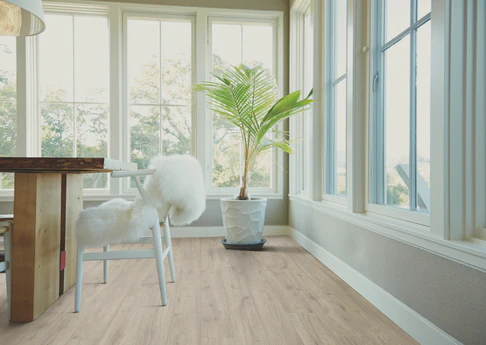
When it comes to updating your floors in Winter Garden or north Orlando, two options consistently rise to the top: laminate and vinyl. Both offer incredible value, durability, and style – but which one is the best fit for your home?
The good news? You can’t really go wrong with either choice. Both flooring types have come a long way in recent years, offering realistic wood looks, easy maintenance, and budget-friendly price points. The key is understanding what each brings to the table so you can make the right decision for your lifestyle.
Understanding the Basics
Let’s start with what makes each flooring type unique.
Laminate flooring is made from compressed wood fibers topped with a photographic layer that mimics hardwood, stone, or tile. A protective wear layer sits on top to resist scratches and fading. It’s a floating floor, meaning it’s installed over underlayment without glue or nails.
Vinyl flooring is made from synthetic materials – primarily PVC – and comes in planks, tiles, or sheets. Modern vinyl (often called luxury vinyl plank or LVP) features multiple layers, including a realistic printed design layer and a tough wear layer. Like laminate, it typically floats over the subfloor.
Both options give you the look of real hardwood without the high cost or intensive maintenance. Now let’s dig into what sets them apart.
Durability and Water Resistance
In Central Florida’s humid climate, water resistance matters. This is where vinyl takes a clear lead.
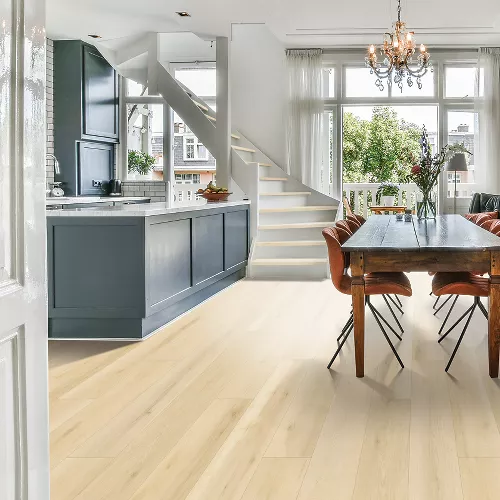
Vinyl is 100% waterproof, making it ideal for kitchens, bathrooms, laundry rooms, and basements. Spills, splashes, and even minor flooding won’t damage the planks. For families with kids, pets, or anyone prone to the occasional kitchen mishap, vinyl offers serious peace of mind.
Laminate, while highly durable, is water-resistant but not waterproof. It can handle light spills if cleaned up quickly, but standing water can seep into the core and cause swelling or warping. That said, laminate excels in high-traffic areas like living rooms and bedrooms where moisture isn’t a concern. Its dense construction resists dents and scratches beautifully.
If you’re weighing your options, check out our vinyl flooring buying guide and laminate buying guide for more detailed comparisons.
Comfort and Feel Underfoot
Here’s where personal preference comes into play.
Vinyl has a softer, slightly cushioned feel thanks to its flexible composition. It’s warmer underfoot and quieter when you walk across it—a nice bonus if you have kids running around or prefer a softer surface in bedrooms.
Laminate feels firmer and more similar to real hardwood. Some homeowners prefer this solid, authentic feel. It also tends to have a bit more “click” sound when you walk on it, though quality underlayment can minimize noise.
Both options are comfortable for everyday living. It really comes down to whether you prefer a softer or firmer surface.
Style and Aesthetics
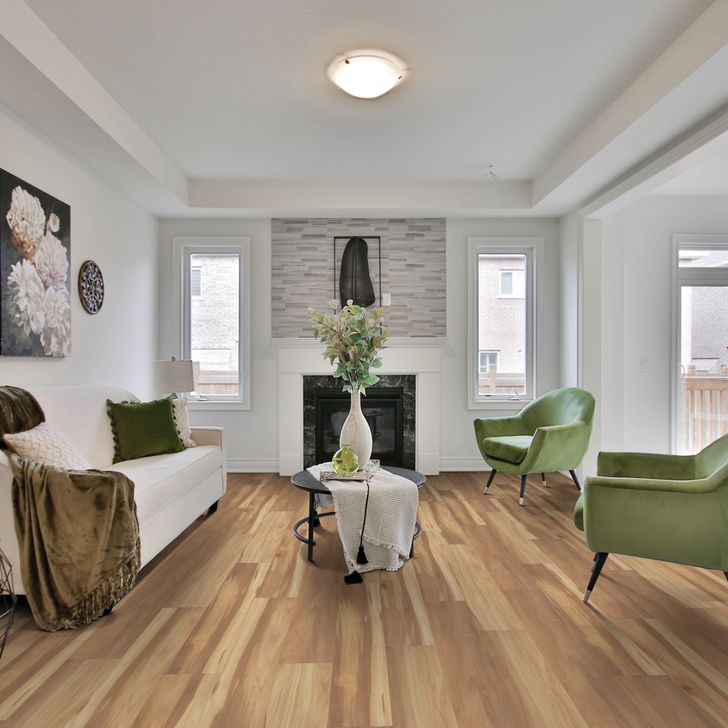
Both laminate and vinyl offer stunning design options that convincingly replicate hardwood, stone, and tile.
Laminate often has a slightly more textured surface that closely mimics real wood grain. The embossing tends to be deeper, giving it an authentic look and feel. You’ll find a wide range of styles, from rustic barn wood to sleek contemporary finishes.
Vinyl also offers impressive realism, especially in luxury vinyl plank (LVP) formats. The printing technology has advanced significantly, and many vinyl products feature textured surfaces that look and feel remarkably like real wood. Browse our vinyl flooring collection and laminate flooring collection to see the variety available.
The bottom line? Both deliver beautiful results that complement any décor style.
Installation and Maintenance
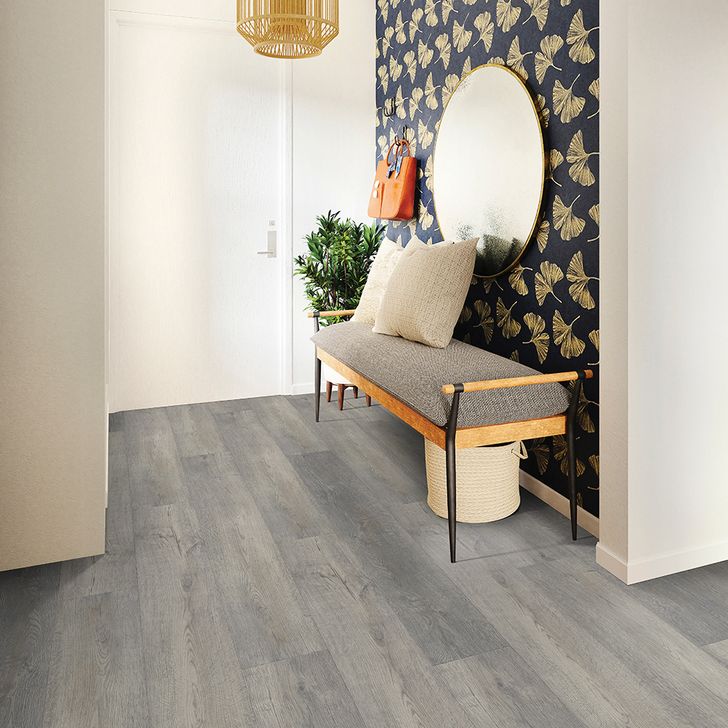
Both laminate and vinyl are DIY-friendly if you’re handy, though professional installation ensures the best results.
Installation processes are similar – both typically use a click-lock system that floats over the subfloor. Vinyl can be slightly more forgiving on uneven subfloors due to its flexibility, while laminate requires a perfectly level surface.
Maintenance is easy for both. Regular sweeping or vacuuming plus occasional damp mopping keeps them looking great. Avoid excessive water on laminate, and you’re good to go.
Flooring Cost Considerations
Budget matters, and both options deliver excellent value.
Generally, laminate tends to be slightly less expensive than vinyl, though prices vary based on quality and style. Both are significantly more affordable than hardwood while offering similar aesthetics.
For rental properties or vacation homes in the Winter Garden area, laminate is a smart investment that balances cost and durability.
Which One Should You Choose?
Here’s a quick guide:
Choose vinyl if:
- You need flooring for moisture-prone areas (kitchens, bathrooms, basements)
- You prefer a softer, warmer feel underfoot
- You want 100% waterproof protection
- You have pets or young children
Choose laminate if:
- You’re flooring dry areas like bedrooms and living rooms
- You prefer a firmer, more authentic hardwood feel
- You want the most budget-friendly option
- You prioritize scratch resistance in high-traffic zones
Still unsure? Our Central Florida vinyl guide offers additional insights specific to our local climate and lifestyle.
Making Your Decision
Whether you choose laminate or vinyl, you’re making a smart investment in your north Orlando home. Both options offer durability, style, and easy maintenance that fits Florida living.
The best choice depends on your specific needs – where you’re installing it, your lifestyle, and your personal preferences. And remember, you can mix and match! Many homeowners use vinyl in wet areas and laminate in bedrooms and living spaces.
We Can Help!
Need help deciding between laminate and vinyl for your Winter Garden home? Visit Big Bob’s Flooring Outlet to see both options in person, feel the difference underfoot, and get expert advice tailored to your space. Our team knows Central Florida homes inside and out, and we’re here to help you find the perfect flooring solution. Stop by our showroom or give us a call today!

